




Endovascular Aneurysm Repair (EVAR)
Introduction
Endovascular aneurysm repair of an abdominal aortic aneurysm (EVAR) is today the modern alternative to traditional open surgery.
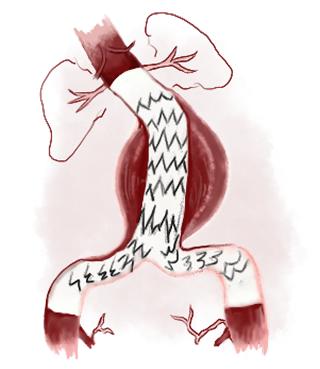
Instead of a large abdominal incision, the procedure is performed through small incisions in the groin arteries, through which a specially designed endovascular graft (EVAR stent graft) is advanced to the site of the aneurysm. This minimally invasive technique allows the aneurysm to be treated without opening the abdomen, significantly reducing surgical trauma and recovery time.
The timely early diagnosis of the disease
is very important
for the good outcome of the condition in both stages of the disease.
What Are EVAR Stent Grafts?
EVAR grafts are specialised medical devices that combine a metal framework (stent) and a durable synthetic fabric graft. Once placed inside the aorta, the device acts as a new internal channel for blood flow, effectively isolating the aneurysm from blood pressure.
Different types of EVAR grafts are available depending on the size of the aneurysm, the shape and anatomy of the aorta, and the patient’s individual vascular anatomy. The choice of graft is therefore personalized for each patient.
EVAR grafts are designed for long-term durability, but patients must undergo regular imaging follow-up to ensure the graft remains properly positioned and functioning effectively.
What are the interventional methods of surgical treatment?
Why EVAR Is Important
An abdominal aortic aneurysm (AAA) is a condition that often produces no symptoms until it becomes dangerous. It involves a localised dilation of the wall of the aorta, the largest artery in the body. If rupture occurs, it can lead to life-threatening internal bleeding. Early diagnosis and appropriate treatment are therefore critical.
For many years, the only treatment option was open surgical repair, a demanding procedure associated with large abdominal incisions, longer hospital stays, and a higher risk of complications. Today, endovascular aneurysm repair (EVAR) allows most patients to be treated with significantly less surgical stress. The procedure reduces the risk of aneurysm rupture, shortens recovery time, and minimizes postoperative complications.
How Endovascular Aneurysm Repair (EVAR) Is Performed
The procedure is carefully planned using detailed imaging studies, typically CT angiography and vascular angiography. These examinations allow precise mapping of the aneurysm and surrounding vessels.
During the procedure, the surgeon accesses the arterial system through small incisions in the groin. Special catheters are then advanced through the arteries to deliver the EVAR stent graft to the aneurysm site. The graft consists of a metal stent framework covered with synthetic graft material. Once deployed, it expands and forms a new internal tube inside the aorta.
Blood then flows through the graft instead of the weakened aneurysm wall, effectively excluding the aneurysm from circulation. As a result, the aneurysm is no longer exposed to arterial pressure, and the risk of rupture is dramatically reduced.
Benefits of EVAR for Patients
Endovascular aneurysm repair offers several important advantages compared with traditional open surgery. The most significant difference is the reduced physical stress on the body. Instead of a large abdominal incision, EVAR is performed through small groin incisions, resulting in less postoperative pain, minimal blood loss, and lower complication risk.
Hospital stay is significantly shorter—usually no more than two days—and patients can return to normal daily activities much faster. For many individuals, this means avoiding prolonged recovery and returning earlier to work and everyday life.
Another important advantage is that EVAR can often be performed in patients considered high risk for open surgery, such as older individuals or those with significant medical conditions.
According to the ESVS guidelines, repair of an abdominal aortic aneurysm is considered when the diameter reaches 5.5 centimetres in men and 5 centimetres in women, or when the growth exceeds 1 centimetre per year. After an endograft is placed, what is required is lifelong imaging follow-up.
When EVAR Is Recommended
Endovascular repair of an abdominal aortic aneurysm is not necessary in every case. Small aneurysms are typically monitored through regular imaging surveillance. However, intervention becomes necessary when the aneurysm diameter exceeds 5–5.5 cm or the aneurysm increases rapidly in size. At this stage, the risk of rupture becomes significant.
EVAR is often the preferred treatment option in patients who are at higher risk for open surgery due to advanced age, cardiovascular disease, or other medical conditions. It is also recommended when the anatomy of the aneurysm allows safe and stable placement of the stent graft.
In summary, EVAR is chosen when an abdominal aortic aneurysm poses a threat to patient safety, while aiming to provide effective treatment with minimal surgical burden.
Recovery After EVAR
Recovery after EVAR is typically rapid, and most patients return to daily activities within a few days. Hospitalisation is short, and early mobilization is encouraged, which helps reduce complications associated with prolonged immobility.
However, the success of treatment does not end with the procedure. The endograft must be checked regularly with imaging, so that it can be confirmed that it remains in the correct position and that there is no leakage of blood around it (endoleak). This minimises the likelihood of postoperative complications after Abdominal aortic aneurysm.
For patients, this means they can continue their normal lifestyle while maintaining regular medical follow-up and support from their vascular surgeon.
Endovascular aneurysm repair is a procedure that requires a combination of advanced medical expertise and modern technology. At the Athens Medical Center, Dr. Theodosios Bisdas utilizes his extensive experience in endovascular techniques together with the capabilities of the “Prometheus” hybrid operating room, offering patients access to care based on precision, safety, and the latest advancements in modern vascular surgery.
The use of an endograft with visceral branches in complex thoracoabdominal aneurysms was presented at the Vascupedia 2021.
Frequently Asked Questions (FAQs)
Frequently Asked Questions (FAQs)
Complications after EVAR are generally less frequent than with open surgery, but they may include issues such as endoleak, which is a small blood leak around the graft, or stent graft migration. For this reason, regular imaging follow-up is essential.
How long do EVAR grafts last?
EVAR grafts are designed for long-term durability and can function effectively for many years. Nevertheless, periodic monitoring is necessary to ensure they remain properly positioned and continue to protect the aneurysm.
What is the difference between EVAR and open aneurysm repair?
Open surgery requires a large abdominal incision and longer recovery. EVAR, on the other hand, is performed through small arterial access points, resulting in faster recovery, less surgical trauma, and shorter hospitalisation.
What precautions should I take after EVAR?
After the procedure, patients should follow medical advice carefully, attend scheduled imaging follow-ups, and adopt healthy lifestyle habits, including smoking cessation, balanced nutrition, and cardiovascular risk control.
How long does recovery take after EVAR?
Most patients resume normal daily activities within a few days. Full recovery depends on the patient’s overall health status and medical guidance.
What is the cost of EVAR?
The cost varies depending on several factors, including the type of stent graft used, the complexity of the aneurysm, and the hospital environment. A precise estimate is provided after a full clinical and imaging evaluation.

