




PELVIC CONGESTION SYNDROME
Introduction
An pelvic congestion syndrome mostly refers to women's reproductive age, as well as women with a history of multiple deliveries. The syndrome consists of the appearance of one or more atypical symptoms in the pelvis of the woman.
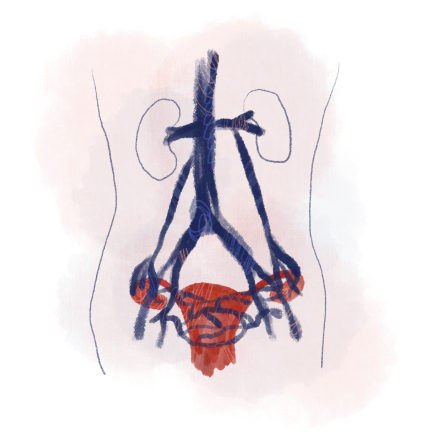
It is a pathological condition in which blood accumulates in the area of the pelvis. The correct and timely diagnosis is of vital importance as the treatment of the condition requires an excellent cooperation between a gynaecologist and a vascular surgeon.
Who treats it: Theodosios Bisdas, Associate Professor of Vascular Surgery and Director of the 3rd Vascular Surgery Department of the Athens Medical Center, diagnoses and treats pelvic congestion syndrome with percutaneous embolisation of the pelvic veins - a minimally invasive treatment performed without incisions.
The timely early diagnosis of the disease
is very important
for the good outcome of the condition in both stages of the disease.
Pelvic Congestion Syndrome – Symptoms
The diagnosis is documented with imaging. An ovarian vein diameter above 6 millimetres on ultrasound is considered abnormal and supports a diagnosis of pelvic venous insufficiency. The syndrome mainly affects women of reproductive age who have given birth, since pregnancy significantly increases venous pressure in the pelvis.
Pelvic congestion syndrome results from valvular insufficiency of the ovarian veins. When the valves fail to function properly, blood flows backward toward the ovaries and subsequently into the parametrial venous plexus. The symptoms that develop depend on which pelvic veins are affected. The most common symptoms include:
- pain during sexual intercourse (dyspareunia)
- frequent urge to urinate or urinary leakage when coughing or laughing
- pain in the groin area or a feeling of heaviness in the leg
- varicose veins in atypical locations, such as behind the knee, on the buttocks, or in the vulvar area
- rapid recurrence of varicose veins after leg vein treatment (for example after saphenous vein laser therapy)
- severe pelvic pain and heavy bleeding during menstruation
In some cases, the syndrome has also been associated with lower back pain or symptoms similar to irritable bowel syndrome. Because many of these symptoms resemble those of endometriosis, pelvic congestion syndrome often presents a significant diagnostic challenge.
Finally, pelvic congestion syndrome has also been associated with infertility, although strong scientific evidence is still limited. This suspicion arises indirectly from the fact that the male equivalent condition, varicocele (varicose veins of the testes), is clearly associated with infertility and impaired sperm quality.

The role of the vascular surgeon
Our clinic has extensive experience in the treatment of pelvic congestion syndrome. After obtaining the patient’s medical history, women with suspected PCS undergo transvaginal duplex ultrasound, either by their Vascular Surgeon or by collaborating gynaecologists specialised in vascular imaging. In cases with atypical symptoms, advanced magnetic resonance neurography may be performed to visualize the pelvic nerves and potential compression syndromes with high accuracy. Once the diagnosis is confirmed, the patient undergoes minimally invasive diagnostic angiography followed by embolisation of the ovarian veins. Using the Hybrid Operating Room, the procedure is performed without open surgery, with minimal risk and excellent safety.
What are the interventional methods of surgical treatment?
Causes of Pelvic Congestion Syndrome
Pelvic Congestion Syndrome primarily results from venous stasis and dilation of pelvic veins, meaning chronic venous insufficiency or reflux within the pelvic venous system. The causes are multifactorial and may include:
Venous insufficiency or reflux of ovarian and pelvic veins
Failure of the venous valves to prevent backward blood flow leads to blood pooling and progressive dilation of veins around the uterus, ovaries, and vagina.
Hormonal factors (mainly estrogen)
Increased estrogen levels can cause vasodilation and reduced venous tone, making the pelvic veins more susceptible to venous congestion. This explains why the syndrome occurs most frequently in women of reproductive age, especially those who have had multiple pregnancies.
Pregnancy and multiple pregnancies
During pregnancy, blood volume and venous pressure in the pelvis increase, while the enlarged uterus can mechanically compress surrounding vessels. These changes may persist even after childbirth, maintaining the venous congestion.
Anatomical or mechanical causes
Certain compression syndromes can impair venous drainage and contribute to pelvic congestion, including Nutcracker syndrome (compression of the left renal vein), May–Thurner syndrome (compression of the iliac veins), and other anatomical variations affecting pelvic venous outflow.
Lifestyle and contributing factors
Factors that increase venous pressure may worsen pelvic venous congestion, such as prolonged standing or sitting, obesity, chronic constipation, intense physical strain, and hormonal treatments or contraceptives.
Diagnosis
Diagnosis begins with a detailed medical history followed by transvaginal duplex ultrasound (Triplex). If signs of venous insufficiency and dilation of the parametrial venous plexus are detected, pelvic congestion syndrome is suspected. The diagnostic process is completed with diagnostic ovarian vein angiography. If the diagnosis is confirmed, the vascular surgeon proceeds with minimally invasive embolisation of the ovarian veins.
Treatment
Treatment of pelvic congestion syndrome is minimally invasive and focuses on embolisation of the ovarian veins, which is considered the treatment of choice.
During the procedure, the vascular surgeon performs a small puncture in the femoral or brachial vein, a catheter is guided to the refluxing ovarian veins, and embolic materials, such as coils or specialised sclerosing agents, are placed to block abnormal blood flow to the dilated veins. The procedure is performed under local anaesthesia, is bloodless and minimally invasive, does not require hospitalisation, and has very high success rates.
Recovery is rapid, with most symptoms improving immediately or within a few days. Patients typically return quickly to their daily activities, and recurrence is rare. If symptoms persist, further evaluation may be required to identify additional venous reflux or other underlying conditions.

Professor Theodosios Bisdas – Director of the Vascular Surgery Department at Athens Medical Center – discusses pelvic congestion syndrome and its connection with chronic pelvic pain in women. He explains why many women live with pain for years without a clear diagnosis, which symptoms may indicate pelvic congestion syndrome, how proper investigation is carried out, and when treatment with ovarian vein embolisation is required.
Frequently Asked Questions (FAQs)
What causes pelvic pressure during pregnancy?
It is often due to increased blood volume and mechanical pressure from the uterus on pelvic veins. If accompanied by varicose veins or a feeling of heaviness that worsens when standing, evaluation for pelvic venous congestion may be necessary.
Is free fluid in the pelvis concerning?
A small amount may be a normal finding (for example during ovulation). However, if accompanied by pain or dilated veins on ultrasound, further evaluation by a specialist is recommended.
Why do varicose veins appear in the vulvar or perineal area?
These may be caused by reflux in the ovarian or pelvic veins. They often occur during pregnancy but may persist afterward, causing discomfort or heaviness.
Can chronic pelvic pain be caused by venous congestion?
Yes. Pelvic congestion syndrome is a common cause of chronic pelvic pain, especially in women of reproductive age. The pain typically worsens after prolonged standing or at the end of the day.
Why does pain worsen at the end of the day?
Prolonged standing increases venous pressure and blood pooling in the pelvis, worsening symptoms of venous insufficiency.
When are spider veins in the buttocks or thighs related to pelvic veins?
If they occur together with pelvic pain or vulvar varicose veins, the underlying cause may be pelvic venous reflux.
Why does pain increase during or after sexual intercourse?
Increased blood flow and pelvic pressure during intercourse can worsen symptoms in already dilated pelvic veins.
How do multiple pregnancies affect pelvic veins?
Each pregnancy can cause progressive dilation of pelvic veins and weakening of venous valves, which may lead to venous reflux in some women.
Can hormonal therapy or contraceptives affect the condition?
Certain hormonal treatments may influence venous tone and symptoms. Treatment decisions should always be made in consultation with the treating physician.
Is pelvic congestion syndrome related to infertility?
There are no definitive studies confirming this link. However, the condition is sometimes compared with varicocele in men, which is known to be associated with infertility.
Which doctor treats pelvic congestion syndrome in Athens?
Pelvic congestion syndrome is treated by a specialist vascular surgeon. Theodosios Bisdas, Associate Professor of Vascular Surgery and Director of the 3rd Vascular Surgery Department of the Athens Medical Center, has extensive experience in diagnosing and treating the syndrome with percutaneous embolisation of the pelvic veins.
What is pelvic vein embolisation and how does it treat pelvic congestion syndrome?
Embolisation is a minimally invasive endovascular technique in which the incompetent pelvic veins are blocked from the inside with special coils or sclerosing agents, so that the backflow of blood causing the chronic pelvic pain stops. It is performed through a small puncture, usually without hospital admission, with an immediate return to daily activities.

