


Case Study 1: Pelvic Congestion Syndrome
How was pelvic congestion syndrome treated in this case?
Pelvic congestion syndrome is caused by venous stasis and dilatation of the pelvic veins and is treated in a minimally invasive way with embolisation of the ovarian veins, which is the method of choice.
Chronic pelvic pain and urinary frequency in a woman – definitive diagnosis and treatment with ovarian vein embolisation.
Patient profile
Female, 38 years old, mother of two children.
Symptoms and duration
The patient suffered for over two years from chronic pain in the lower abdomen and lower back, which worsened in the afternoon or after prolonged standing. At the same time, she presented with... Frequent urination, a feeling of pressure in the right hip, dyspareunia (discomfort during sexual intercourse) and occasional... urine leakage during sneezing or intense laughter.The symptoms were so burdensome that they limited her social and professional activities.
For a long time, she had received the wrong diagnosis of... Endometriosis and had undergone treatments without success, which had increased her frustration and anxiety.
Diagnosis
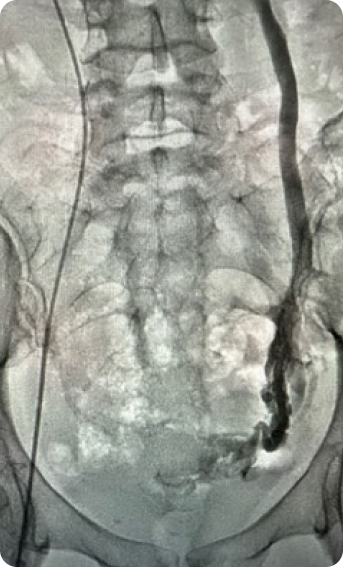
After a new approach, a transvaginal Doppler ultrasound was performed, revealing dilated pelvic veins. The final confirmation was made with... Phlebography, which revealed extensive blood reflux.
Therapeutic approach
The minimally invasive treatment with endovascular embolisation of the ovarian veins was decided
Description of the procedure
The procedure was performed under local anaesthesia, through catheterisation from the right femoral vein. Under fluoroscopic guidance, the pathological veins were catheterized, and coils were placed along with a sclerosing agent. The entire procedure lasted approximately 40 minutes, without complications.
Course and recovery
The patient was mobilized immediately and discharged on the same day. By the first week, she reported... a clear reduction in pain, and after 6 months of follow-up, the symptoms had completely disappeared. Her quality of life improved dramatically, with a return to daily activities.
What made it unique?
The long-standing incorrect diagnosis and the failure of other treatments highlighted how often Pelvic Congestion Syndrome remains undiagnosed. The case emphasized the importance of a proper diagnostic approach.
Message to the public:
Chronic pelvic pain is not always a gynaecological issue. Specialised vascular surgical assessment and modern minimally invasive techniques can offer a definitive solution.