


Case Study 2: Aortic Arch Aneurysm
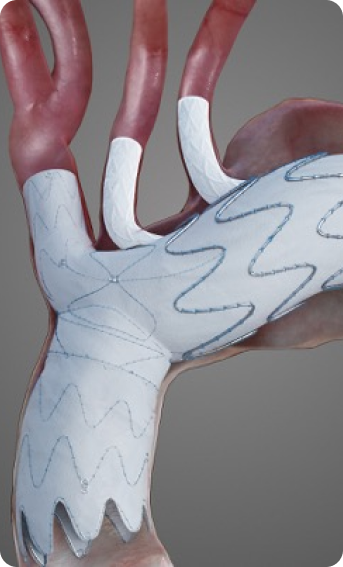
How was the aortic arch aneurysm repaired in this case?
An aortic arch aneurysm is a dangerous condition because of the risk of rupture. The aortic arch lies between the ascending and the descending aorta and supplies blood to the vessels of the brain and the upper limbs.
Endovascular repair of an aortic arch aneurysm using the Nexus stent graft – first application in Greece.
Patient profile
Male, 72 years old, with a significant cardiovascular history.
Symptoms and duration
The patient had a known Type A dissection which had been treated 5 years earlier with replacement of the ascending aorta. During long-term follow-up, a gradual dilation of the aortic arch was noted, reaching a diameter of over 6 cm. In the last six months, he reported chest pain and easy fatigue.
Diagnosis
The CT angiography revealed an aneurysm of the entire aortic arch, with a narrow true lumen due to the previous dissection.
Therapeutic approach
Given the high risk of open reoperation, endovascular repair was decided using the use of the new Nexus stent graft, which allows for repair in complex anatomies.
Description of the procedure
The procedure was performed through femoral and brachial access. The Nexus stent graft was placed with precision, ensuring blood flow to the branches of the arch. The main difficulty was the very short landing zone near the coronary arteries. and the narrow true lumen due to the dissection. With the use of this specialised stent graft, our expertise, and the procedure being performed in the Hybrid Operating Room, the graft was successfully placed. The surgery lasted approximately 3 hours.
Course and recovery
The patient was hospitalized for 4 days, without neurological or other complications. On the 6-month follow-up, the aneurysm was completely excluded, with excellent patency of the arteries.
What made it unique?
It was the first application of the Nexus stent graft in Greece, in a very challenging anatomy, providing a minimally invasive solution for a high-risk patient who would otherwise have had limited options.
Message to the public:
Aortic aneurysms can progress silently, especially in patients with a history of dissection. Regular monitoring and modern endovascular techniques now offer solutions even in extremely challenging cases.