Can diet clear your carotid arteries?
The question comes up at almost every appointment: is there a food that “cleans” the carotid arteries? The honest answer is that diet does not dissolve plaque that has already formed, but it largely determines whether that plaque will grow and how dangerous it will become.
Lists of foods that supposedly “unclog” the arteries circulate online. Garlic, pomegranate juice, olive oil, various herbs. None of them removes atherosclerotic plaque from a carotid artery. This does not mean that diet is irrelevant: it means that its role is different from the one attributed to it.
Dr Theodosios Bisdas, Associate Professor of Vascular Surgery and Director of the 3rd Department of Vascular Surgery at Athens Medical Center, specialises in the diagnosis and treatment of carotid artery disease, using both open surgery and the endovascular technique.
Has narrowing been found in your carotid arteries?
A triplex scan and a clinical assessment show whether medication is enough or whether something more is needed. The decision is not made on the percentage alone.
What atherosclerotic plaque is and why it does not “go away”
Carotid stenosis is a local manifestation of atherosclerosis. Cholesterol, inflammatory cells, fibrous tissue and, over time, calcium build up within the artery wall. The result is a plaque that narrows the lumen of the vessel.
Once the plaque has acquired fibrous and calcified components, it is a structural change in the wall, not “dirt” sitting inside the vessel that can be washed away. That is why no food, drink or supplement removes it. Plaque can only be removed mechanically, by endoluminal removal or by open endarterectomy.
What diet really achieves
The fact that it does not dissolve plaque does not mean that it does not change the course of the disease. Diet works on three levels:
- It slows progression. Less saturated and trans fat means lower LDL cholesterol and less material for the plaque to grow.
- It stabilises the plaque. A plaque that is not inflamed is less likely to rupture. It is plaque rupture, and not the degree of stenosis on its own, that causes a stroke.
- It controls the risk factors. Blood pressure, blood sugar and weight are directly affected by what we eat, and each of them accelerates atherosclerosis.
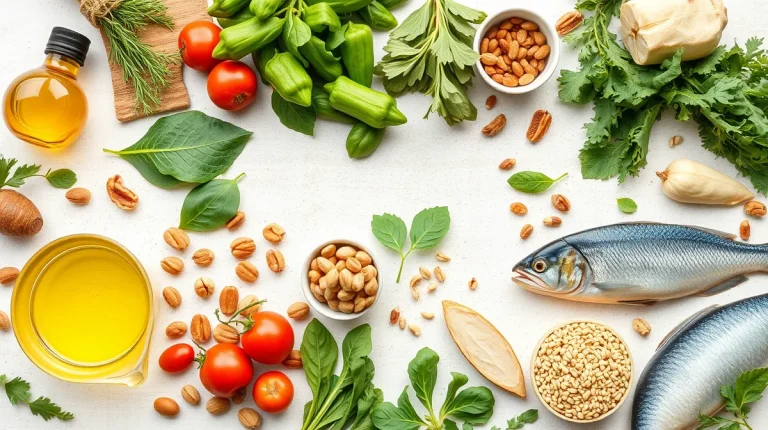
The dietary pattern with the best-documented benefits for the blood vessels is the Mediterranean diet: olive oil as the main source of fat, vegetables, pulses, unsalted nuts, fish, wholegrain cereals and limited red and processed meat.
In the large PREDIMED trial, with 7,447 participants at high cardiovascular risk, a Mediterranean diet with extra-virgin olive oil or nuts reduced major cardiovascular events (heart attack, stroke, cardiovascular death) by about 30% compared with a low-fat diet.
What matters more than diet
If priorities had to be ranked, diet would not come first. First comes smoking. Smoking damages the endothelium, increases inflammation and promotes plaque rupture. Stopping smoking changes the risk profile more than any change on the plate.
Next come blood pressure control, blood sugar control and regular aerobic exercise. For exercise, the target for adults is at least 150 minutes of moderate aerobic activity per week, such as brisk walking.
Why medication is also needed
In carotid artery disease, medication is not an alternative to diet; it is the other half of the same treatment. It usually includes:
- A statin, which lowers LDL cholesterol and also has an anti-inflammatory effect on the vessel wall.
- An antiplatelet drug, which reduces the likelihood of a clot forming on the plaque.
- Treatment for blood pressure and diabetes, where present.
The specific treatment and doses are always determined by the treating doctor, based on the overall cardiovascular profile.
How stenosis is assessed
The main test is the carotid triplex scan, a painless ultrasound scan that shows the degree of stenosis, the flow velocity and the characteristics of the plaque. When more detail is needed, particularly before a procedure, it is supplemented with CT or MR angiography.
The percentage is not the only thing that matters. A plaque with a heterogeneous, low-echogenicity appearance is considered more unstable than a solid, calcified plaque of the same percentage.
When diet is not enough
Conservative management is the right choice for the vast majority of patients with mild or moderate, asymptomatic stenosis. Interventional treatment, with endarterectomy or with angioplasty and stent, is mainly considered in two situations:
- when the stenosis has caused symptoms, i.e. a transient ischaemic attack or a stroke, and is significant, usually from around 50% upwards
- when the stenosis is severe, usually from around 70% upwards, even without symptoms, in selected patients with a good life expectancy and high-risk features
The decision is individualised and takes into account age, plaque morphology, coexisting conditions and the anatomy of the vessels.
Some symptoms cannot wait for an appointment. Sudden weakness or numbness on one side of the body, difficulty speaking, a drooping corner of the mouth or temporary loss of vision in one eye, like a curtain coming down, are signs of a transient ischaemic attack or a stroke. Even if they resolve within a few minutes, they require going to a hospital emergency department immediately.
Frequently asked questions
Is there a food that dissolves atherosclerotic plaque?
No. No food, juice, herb or supplement removes plaque that has already formed in the wall of the carotid artery. A healthy diet slows progression and stabilises the plaque; it does not make it disappear.
If I watch my diet, will I avoid surgery?
In mild or moderate asymptomatic stenosis, diet together with medication and stopping smoking is often the only treatment needed. However, when the stenosis is severe or has caused neurological symptoms, conservative treatment alone is not enough to reduce the risk of stroke.
Do dietary supplements help the carotid arteries?
No supplement has been shown to reduce carotid stenosis. Some may even interact with antiplatelet or anticoagulant medicines, so it is best always to tell your doctor about them.
Should I cut fat out of my diet completely?
No. What matters is the type of fat, not avoiding fat altogether. Olive oil, nuts and oily fish have a place in the diet, whereas what should be limited is the saturated and trans fats in processed foods.
How often should I repeat the triplex scan?
The interval is set by the doctor based on the degree of stenosis, the plaque morphology and whether there are symptoms. Once stenosis has been confirmed, follow-up is regular and does not stop just because there are no symptoms.
Sources
- Mayo Clinic – Carotid artery disease: mayoclinic.org
- Cleveland Clinic – Carotid Artery Disease: my.clevelandclinic.org
- NEJM (2018) – Primary Prevention of Cardiovascular Disease with a Mediterranean Diet (PREDIMED): nejm.org
- WHO – Physical activity: who.int
- NHS – Carotid endarterectomy: nhs.uk
- American Heart Association – Carotid Artery Disease: heart.org
- NINDS – Stroke: Assess and Treat: ninds.nih.gov
This article is for information only and does not replace individual medical assessment. If you have been diagnosed with carotid stenosis or have risk factors, consult a vascular surgeon.