Category: Μη κατηγοριοποιημένο
Ενδαγγειακή ή ανοιχτή αποκατάσταση ανευρύσματος αορτής: Ποια μέθοδος προτιμάται;
Το ανεύρυσμα της αορτής αντιμετωπίζεται σήμερα με δύο βασικές μεθόδους: την ανοιχτή χειρουργική αποκατάσταση και την ενδαγγειακή αποκατάσταση (EVAR για την κοιλιακή αορτή, TEVAR για τη θωρακική). Η επιλογή της μεθόδου είναι μία από τις σημαντικότερες αποφάσεις για τον ασθενή με ανεύρυσμα – και εξαρτάται από την ανατομία, την ηλικία, τη γενική κατάσταση και τις προτιμήσεις του.
Ο Θεοδόσιος Μπίσδας, Αν. Καθηγητής Αγγειοχειρουργικής και Διευθυντής της Γ’ Αγγειοχειρουργικής Κλινικής του Ιατρικού Κέντρου Αθηνών, εξειδικεύεται τόσο στην ενδαγγειακή όσο και στην ανοιχτή και υβριδική αποκατάσταση ανευρυσμάτων αορτής, στο hybrid clinic of the Athens Medical Center.
Τι είναι η ανοιχτή αποκατάσταση ανευρύσματος
Στην ανοιχτή επέμβαση, ο χειρουργός προσπελαύνει την αορτή μέσω τομής στην κοιλιά ή στον θώρακα, αφαιρεί το ανευρυσματικό τμήμα και το αντικαθιστά με συνθετικό μόσχευμα, ραμμένο απευθείας στο υγιές αγγείο. Είναι μέθοδος με δεκαετίες τεκμηρίωσης και εξαιρετική ανθεκτικότητα σε βάθος χρόνου, απαιτεί όμως γενική αναισθησία, μεγαλύτερη χειρουργική επιβάρυνση και μακρύτερη ανάρρωση.
Τι είναι η ενδαγγειακή αποκατάσταση (EVAR / TEVAR)
Στην ενδαγγειακή αποκατάσταση, ένα ενδομόσχευμα (stent-graft) προωθείται στην αορτή μέσα από μικρές παρακεντήσεις στις μηριαίες αρτηρίες, υπό απεικονιστική καθοδήγηση, και εκπτύσσεται στο εσωτερικό του ανευρύσματος αποκλείοντάς το από την κυκλοφορία. Δεν απαιτείται μεγάλη τομή και η ανάρρωση είναι σημαντικά ταχύτερη. Σύγχρονα διακλαδισμένα και θυριδωτά ενδομοσχεύματα, όπως το Nexus Duo για το αορτικό τόξο, επιτρέπουν πλέον την ενδαγγειακή θεραπεία ακόμη και των πιο πολύπλοκων ανευρυσμάτων.
Σύγκριση των δύο μεθόδων
| Κριτήριο | Ενδαγγειακή (EVAR/TEVAR) | Ανοιχτή αποκατάσταση |
|---|---|---|
| Προσπέλαση | Παρακεντήσεις στη μηριαία αρτηρία | Τομή κοιλιάς ή θώρακα |
| Νοσηλεία | Συνήθως 1-3 ημέρες | Συνήθως 5-10 ημέρες |
| Ανάρρωση | 1-2 εβδομάδες | 4-8 εβδομάδες |
| Περιεγχειρητική επιβάρυνση | Χαμηλότερη | Υψηλότερη |
| Μακροχρόνια παρακολούθηση | Τακτικός απεικονιστικός έλεγχος, πιθανές επανεπεμβάσεις | Αραιότερος έλεγχος, μεγάλη ανθεκτικότητα |
| Καταλληλότητα | Απαιτεί κατάλληλη ανατομία | Εφαρμόσιμη σχεδόν σε κάθε ανατομία |
Ποια μέθοδος προτιμάται σήμερα
Στη σύγχρονη αγγειοχειρουργική, η ενδαγγειακή αποκατάσταση αποτελεί την πρώτη επιλογή όταν η ανατομία του ανευρύσματος το επιτρέπει, ιδίως σε ασθενείς μεγαλύτερης ηλικίας ή με συνοδά νοσήματα, λόγω της μικρότερης περιεγχειρητικής επιβάρυνσης. Η ανοιχτή αποκατάσταση παραμένει εξαιρετική επιλογή για νεότερους ασθενείς χαμηλού χειρουργικού κινδύνου με μεγάλο προσδόκιμο επιβίωσης, καθώς και όταν η ανατομία δεν προσφέρεται για ενδομόσχευμα. Σε σύνθετες περιπτώσεις εφαρμόζονται υβριδικές επεμβάσεις, που συνδυάζουν στοιχεία και των δύο μεθόδων στην ίδια συνεδρία.
Ο ρόλος του υβριδικού χειρουργείου
Η απόφαση δεν είναι ποτέ τυποποιημένη – απαιτεί αγγειοχειρουργό με εμπειρία και στις δύο τεχνικές και υποδομή που να τις υποστηρίζει. Στο υβριδικό χειρουργείο IGS7 του Ιατρικού Κέντρου Αθηνών, όλες οι επιλογές είναι διαθέσιμες στην ίδια αίθουσα, ώστε η θεραπεία να προσαρμόζεται στον ασθενή και όχι ο ασθενής στη διαθέσιμη τεχνική. Εάν έχετε ήδη διάγνωση ανευρύσματος και θέλετε τεκμηριωμένη άποψη για τη βέλτιστη μέθοδο, μπορείτε να ζητήσετε δεύτερη γνώμη.
Συχνές Ερωτήσεις
Ποια μέθοδος αποκατάστασης ανευρύσματος είναι πιο ασφαλής;
Η ενδαγγειακή αποκατάσταση έχει μικρότερη περιεγχειρητική επιβάρυνση και ταχύτερη ανάρρωση, γι’ αυτό προτιμάται όταν η ανατομία του ανευρύσματος το επιτρέπει, ιδίως σε ασθενείς μεγαλύτερης ηλικίας ή με συνοδά νοσήματα. Η ανοιχτή αποκατάσταση παραμένει εξαιρετικά ανθεκτική λύση σε βάθος χρόνου. Η τελική επιλογή εξατομικεύεται από τον αγγειοχειρουργό.
Πόσο διαρκεί η ανάρρωση σε κάθε μέθοδο;
Μετά από ενδαγγειακή αποκατάσταση, η νοσηλεία διαρκεί συνήθως 1-3 ημέρες και η επιστροφή στις δραστηριότητες γίνεται μέσα σε 1-2 εβδομάδες. Μετά από ανοιχτή επέμβαση, η νοσηλεία διαρκεί συνήθως 5-10 ημέρες και η πλήρης ανάρρωση 4-8 εβδομάδες, ανάλογα με τον ασθενή.
Ποιος αγγειοχειρουργός στην Αθήνα εξειδικεύεται και στις δύο μεθόδους;
Ο Θεοδόσιος Μπίσδας, Αν. Καθηγητής Αγγειοχειρουργικής και Διευθυντής της Γ’ Αγγειοχειρουργικής Κλινικής του Ιατρικού Κέντρου Αθηνών, πραγματοποιεί τόσο ενδαγγειακές όσο και ανοιχτές και υβριδικές αποκαταστάσεις ανευρυσμάτων στο υβριδικό χειρουργείο του Ιατρικού Κέντρου Αθηνών, επιλέγοντας εξατομικευμένα την καταλληλότερη μέθοδο για κάθε ασθενή.
The vascular system
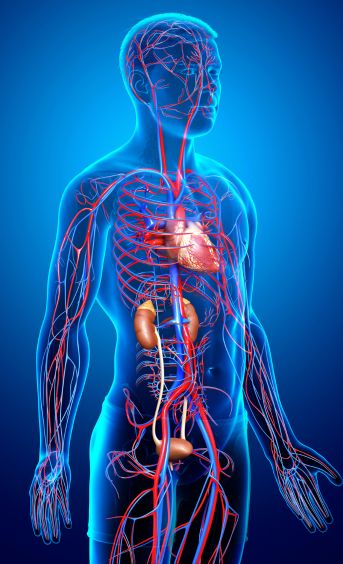
The vascular system is a highly complex yet precisely organised closed network of vessels through which blood circulates to all tissues and organs of the body, delivering oxygen, essential cells and proteins required for normal function
An overview of the vascular (circulatory) system
The vascular or circulatory system transports blood throughout the human body. Its central component is the heart. The left side of the heart pumps oxygenated blood through the arteries to all organs and tissues. As arteries branch, they gradually become smaller and form capillaries, where oxygen and nutrients are exchanged with tissues. After delivering oxygen, blood continues through the venous capillaries and returns via larger veins (the superior and inferior vena cava) to the right side of the heart. From there, it is pumped to the lungs for oxygenation before returning to the left side of the heart, beginning a new cardiac cycle.
Components of the vascular system
Arteries
Arteries carry oxygenated blood under pulsatile pressure throughout the body. They consist of three layers and are highly elastic. The largest artery is the aorta, which is particularly important due to its association with aneurysm formation. Smaller arteries vary in importance depending on the organs they supply and the availability of collateral circulation.
Veins
Veins return deoxygenated blood from tissues back to the lungs. Their walls are thinner, more compressible and more fragile than arterial walls. Veins can dilate significantly, which explains the development of varicose veins. The largest veins are the superior and inferior vena cava. Many smaller veins may remain inactive and become functional when needed (e.g. pregnancy, thrombosis, inflammation).
Capillary vessels
Capillaries are microscopic vessels connecting arteries and veins, allowing exchange of oxygen, nutrients, carbon dioxide and metabolic waste between blood and tissues.
How the vascular system works
The system consists of the heart, arteries, veins and capillaries. The heart acts as the central pump with four chambers: two atria and two ventricles. Oxygenated blood is pumped from the left ventricle into the aorta and distributed through arteries, arterioles and finally capillaries.
The heart functions as the central pump of the circulatory system. It consists of four chambers: two atria and two ventricles. Oxygen-rich blood is pumped from the left ventricle into the aorta and then distributed through the arteries, which carry blood throughout the body. These arteries branch into smaller arterioles and eventually into capillaries.
Capillaries are the smallest blood vessels in the circulatory system and serve as the primary sites of exchange between the blood and the tissues. Through the capillary walls, oxygen and nutrients are delivered from the bloodstream to the body's cells, while carbon dioxide and other metabolic waste products are transferred from the tissues into the blood.
The blood, now depleted of oxygen and carrying waste products, is collected by small vessels called venules, which merge to form veins. The veins return blood to the heart. The superior and inferior vena cava deliver blood to the right atrium, which then passes it to the right ventricle. From there, the right ventricle pumps the blood to the lungs through the pulmonary artery, where it becomes reoxygenated.
This continuous circulation ensures a constant supply of oxygen and nutrients to the body's tissues while simultaneously removing carbon dioxide and other waste products. In this way, the vascular system plays a vital role in maintaining normal organ function and overall health.
Importance of a healthy vascular system
A healthy vascular system is essential for overall wellbeing. Efficient circulation ensures adequate oxygen and nutrient delivery while removing metabolic waste, maintaining physiological balance (homeostasis). Healthy vessels reduce the risk of cardiovascular diseases such as atherosclerosis, hypertension, peripheral arterial disease, venous insufficiency, and venous thrombosis. Good circulation also supports brain, kidney, and skin health and contributes to the prevention of stroke and cognitive decline.
Maintaining vascular health through balanced nutrition, regular exercise and avoidance of smoking and excessive alcohol consumption is critical for longevity and quality of life. The vascular surgeon is the specialist responsible for diagnosis, imaging and treatment of vascular disorders, ranging from ultrasound assessment to angioplasty or bypass surgery.