Gangrene of the foot: early signs, causes and how the limb can be saved
A toe that becomes cold, turns pale and gradually darkens. A small wound on the heel or the side of the foot that will not heal. A toenail cut too deep, causing inflammation that does not settle. All three need immediate attention, because they may be the beginning of the most serious complication of the lower limbs: gangrene. The Greek word comes from the ancient verb gráō (“to eat”), with the root reduplicated, and aptly describes damage that gradually “eats away” the tissues.
Gangrene of the foot usually starts in the toes. In most cases it is a complication of diabetes mellitus or atherosclerosis, conditions that slowly reduce blood circulation to the legs.
Tissue that has already died does not recover. The tissue around it, however, can be saved if the dead part is removed, the infection is treated and, above all, blood flow is restored in time. That is why gangrene is an emergency and, when it is caused by poor circulation, the vascular surgeon plays a central role in treatment.
Dr Theodosios Bisdas, Director of the Vascular Surgery Department of Athens Medical Center, specialises in the treatment of peripheral arterial disease and lower limb ischaemia. His department has some of the most extensive experience in Greece in treating the diabetic foot, and he is a member of the writing group of the new global guidelines of the American and European societies for vascular surgery on the treatment of critical limb ischaemia.
A wound that will not heal, or a toe that changes colour?
A timely assessment by a vascular surgeon shows whether blood flow can be restored and the limb saved.
What is gangrene?
Gangrene is the death (necrosis) of tissue in one part of the body. It happens when tissues do not receive enough blood, which carries oxygen and nutrients to them, or when they are destroyed by a serious infection, often after an injury. Gangrene always means tissue necrosis, but not always infection, and that is exactly what distinguishes the dry from the wet form.
Dry gangrene
In dry gangrene the blood does not reach the area, but there is no infection. The skin is dry to the touch, without open blisters or pus. Dry gangrene can develop slowly and usually affects people with peripheral arterial disease or diabetes.
Wet gangrene
In wet gangrene, impaired blood supply is combined with a bacterial infection. Blisters with pus form, there is fluid discharge and an unpleasant smell. Wet gangrene spreads quickly to neighbouring tissues and needs immediate treatment, because it can be fatal. It can also occur after frostbite, an injury or a severe burn.
Other forms
There is also internal gangrene, which affects organs such as the gallbladder or the bowel, and Fournier's gangrene, a rare and serious infection of the genital area. This article is about gangrene of the foot caused by circulation problems.
Why does it occur in the foot?
The risk of gangrene is higher when there is:
- diabetes mellitus with persistently high blood sugar levels,
- a condition that affects blood supply, such as peripheral arterial disease and atherosclerosis,
- a weakened immune system,
- smoking, excessive alcohol consumption or injecting drug use, which damage the blood vessels.
Vascular risk factors also include Buerger's disease, vasculitis, Raynaud's syndrome and entrapment syndrome or, more rarely still, cystic degeneration of the popliteal artery.
Peripheral arterial disease
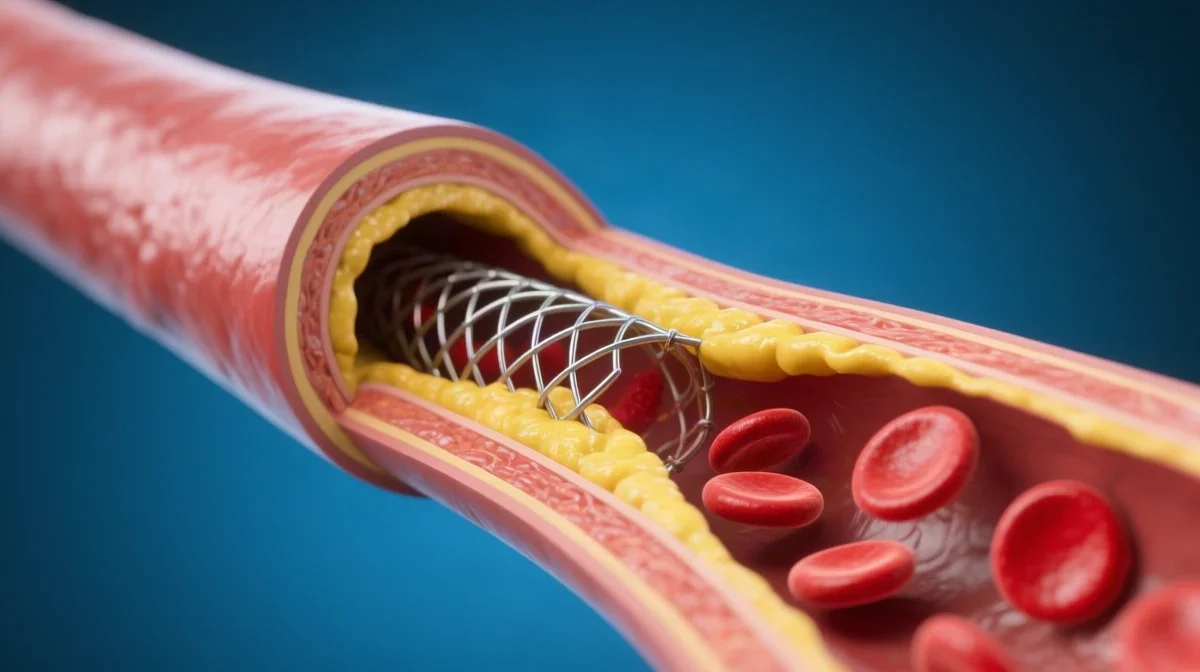
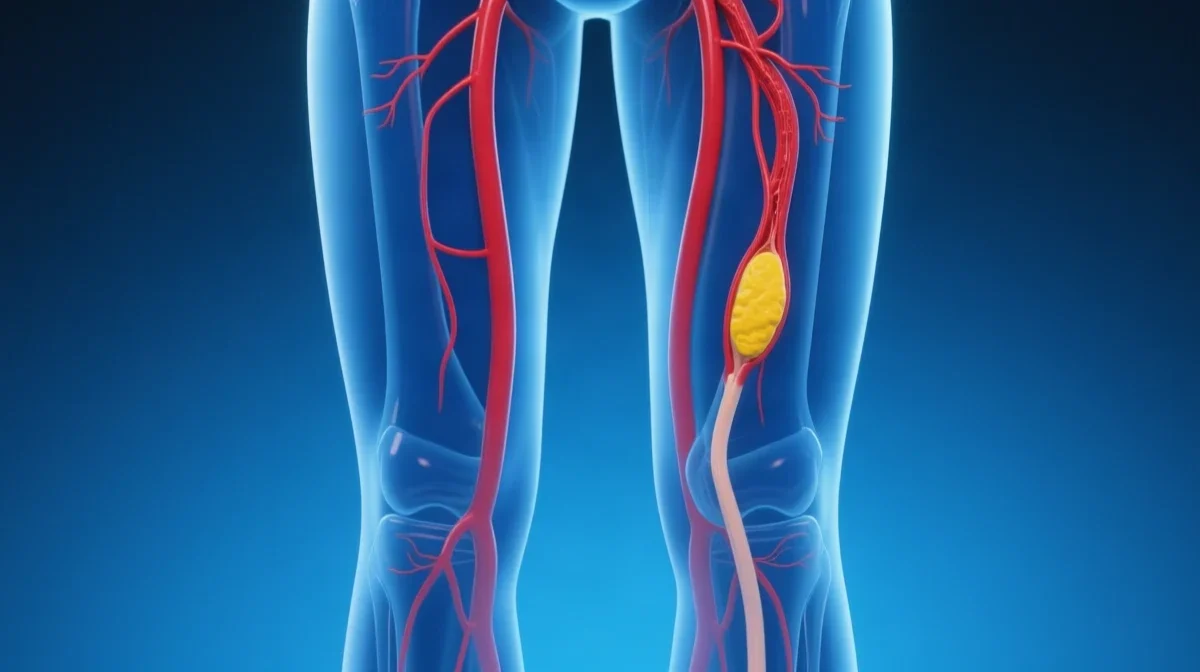
In peripheral arterial disease the arteries of the legs narrow because of atherosclerotic plaques and blood flow is reduced. Many patients have no symptoms, while others develop intermittent claudication, that is, leg pain when walking that eases after a short rest. When flow is severely restricted, critical limb ischaemia develops: pain even at rest, wounds that do not heal and toes that become cold, numb, red and finally black. Blackening means the tissue has died: this is gangrene, the final stage of a process that usually develops over weeks or months.
Diabetic Foot
In the diabetic foot several problems are involved: neuropathy, which reduces the sensation of pain, angiopathy, which restricts blood supply, and arthropathy, which alters the structure of the foot, creating points of high pressure on the skin. As a result, a minor injury may go unnoticed and progress to a wound, ulcer, infection and gangrene. You can find more about prevention and treatment on the diabetic foot page.
Acute ischaemia: not the same as gangrene
Acute ischaemia is often confused with gangrene, but it is a different condition. It occurs when a thrombus or embolus suddenly blocks an artery. The leg, which may have been normal until then, becomes intensely painful, pale, cold, numb and weak within minutes or hours. At this stage there is no necrosis yet, so it is not gangrene. It is, however, just as urgent: if flow is not restored within a few hours, the tissues start to die and the damage becomes permanent.
The first signs in the foot
Symptoms differ depending on the form, but the main signs concern the colour and texture of the skin:
- change in colour: the skin first turns pale, then red, becomes brown and finally purple, greenish or black (on darker skin the changes are harder to see),
- cold, hard or tender skin, or numbness around the area,
- swelling of the area,
- pain that gradually gets worse, while in other cases, especially in diabetes, the area loses sensation,
- blisters or wounds that ooze blood or pus with an unpleasant smell.
Before the condition reaches gangrene, there are usually warning signs that the foot is not getting enough blood: pain at rest, especially at night, that is relieved when the foot hangs over the edge of the bed, wounds that do not heal and a toe that is cold, pale or bluish. In diabetes the pain may not be felt because of neuropathy, which is why checking the feet every day is so important.
When is immediate help needed?
If you suspect gangrene, book an appointment with a vascular surgeon straight away. Urgent help is needed especially when there is:
- skin that turns greenish, purple or black,
- blisters that ooze pus with an unpleasant smell,
- a foot that suddenly becomes very painful, cold and pale or loses sensation and movement, even without a wound, because these are signs of acute ischaemia,
- skin that “crackles” when pressed, which means gas has built up underneath it,
- signs of septic shock: a fast but weak pulse, confusion, dizziness when standing up, cold, clammy and pale skin, difficulty breathing, vomiting or diarrhoea.
How is the diagnosis made?
Assessment starts with the medical history and a clinical examination of the area. Depending on the case, this is followed by:
- blood tests for infection and cultures, to identify the microbe and the right antibiotic,
- imaging tests, such as X-rays, CT and MRI scans,
- tests of blood supply, such as the ankle-brachial index and ultrasound (triplex) of the arteries,
- angiography, which shows where the blockages in the vessels are and helps plan treatment.
Angiography is usually performed with iodinated contrast. In patients with kidney failure, which is common in the diabetic foot, it can be performed with carbon dioxide (CO₂), which does not burden the kidneys.
How is it treated?
Treatment has three goals: to remove dead or infected tissue, to prevent or treat infection and to improve blood flow. The combination of treatments depends on the cause of the gangrene and on how far it has progressed.
Restoring blood supply: treatment tailored to each patient
When gangrene is caused by narrowed or blocked arteries, restoring blood flow is the key to healing wounds and avoiding amputation. There is no single treatment for everyone: the procedure is planned individually (tailor-made), according to the location and extent of the blockages, the condition of the vessels and the patient's general health.
In most cases flow is restored endovascularly, that is, in a minimally invasive way, through a small puncture in the groin and without incisions. Depending on the lesion, balloon angioplasty, stenting or endoluminal removal of the atherosclerotic plaque (atherectomy) is used.
These procedures are performed in the hybrid operating room of Athens Medical Center, a room that combines the equipment of a full operating theatre with a modern high-resolution angiography system. For the patient this means:
- diagnosis and treatment in the same session: angiography shows where the blockages are and they can be opened straight away,
- a clear view even of the small arteries of the calf and foot, on which wound healing depends,
- the option of combining endovascular and open techniques in the same procedure, when needed.
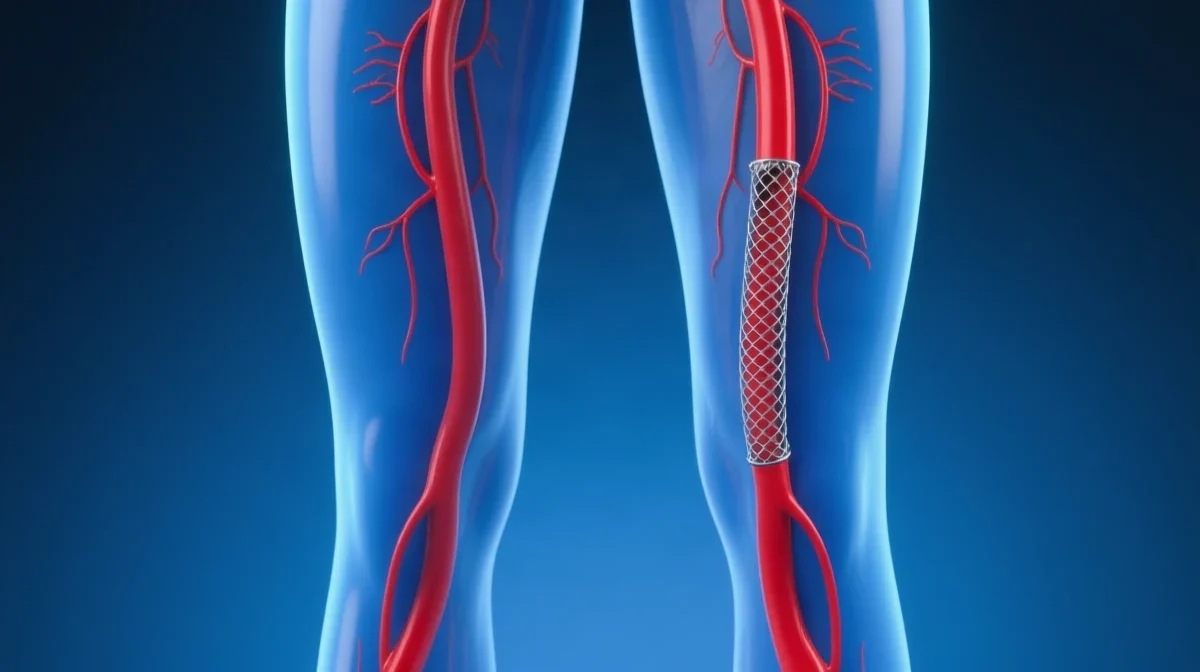
In selected cases, when the blockages are very extensive or endovascular treatment is not feasible or is not expected to last, surgical bypass is preferred: using a graft, ideally one of the patient's own veins, a new route is created so that the blood “bypasses” the blocked section of the artery. The choice between the two methods, or a combination of them, is always based on what suits the individual patient best.
Removing dead tissue
Tissue that has died does not heal and must be removed. Surgical debridement stops the damage spreading to neighbouring healthy tissue and helps tissue that has been injured but has not died to heal. When circulation is poor, debridement is coordinated with restoring blood supply, so that the wound has enough blood to close. More than one debridement is often needed.
Antibiotics and hyperbaric oxygen
When there is a bacterial infection, antibiotics are given, at the dose and for as long as the doctor prescribes. In selected cases, such as gas gangrene or certain diabetic ulcers, hyperbaric oxygen may also help.
Amputation
Amputation is performed only when other treatments are not enough to save the limb or the patient's life. The British guidelines (NICE) on peripheral arterial disease state that every patient with critical limb ischaemia should be assessed by a specialist vascular team, and that major amputation should not be offered before that team has considered all options for restoring blood supply.
Before amputation, a second opinion
The department’s motto is “NO TO AMPUTATION”. Before amputation is decided in a patient with a diabetic foot, angiography of the lower limbs must have been performed, so that it is clear whether the vessels can be opened. When amputation has already been recommended to a patient, the team checks whether all the necessary tests have been carried out and, where technically feasible, intervenes to open the vessels and save the foot.
In a published study by the department, 16 patients (19 limbs) with severe critical limb ischaemia, for whom another centre had recommended major amputation and who came for a second opinion, were examined. All were treated with advanced endovascular techniques. Six months later no limb had been lost (limb salvage 100%) and amputation-free survival was 93%. Eight patients needed a minor amputation, at toe or forefoot level, while the foot itself was preserved.
In advanced or neglected cases, with irreversible damage or septic shock, amputation may be unavoidable. That is why early assessment matters so much and, when amputation has already been recommended, it is worth asking for a second opinion.
Prevention
Gangrene can be prevented if the problem is treated early, before the tissue damage becomes irreversible. The basic measures are:
- stopping smoking,
- a healthy diet, regular exercise and losing excess weight,
- continuing treatment for diabetes, blood pressure and cholesterol,
- checking the feet for swelling or a change in skin colour, every day if you have diabetes and regularly if you have vascular disease,
- proper care of every wound and watching for signs of infection, such as spreading redness, swelling or discharge, or for delayed healing,
- regular check-ups for diabetes.
A wound on a diabetic foot should not be treated with makeshift remedies at home; it needs medical assessment. Read more about the risk factors for vascular disease and how to prevent them.
Frequently asked questions
What are the first symptoms of gangrene in the foot?
The main symptoms are a change in skin colour, which goes from pale to red, brown and finally purple or black, cold or numb skin, swelling and pain that gets worse or, conversely, loss of sensation. In wet gangrene there are also blisters with pus and an unpleasant smell.
What is dry and what is wet gangrene?
In dry gangrene the blood supply is missing, but there is no infection: the skin is dry and progression may be slow. In wet gangrene, in addition to poor blood supply, there is also a bacterial infection, with pus and an unpleasant smell. The wet form spreads quickly and needs immediate treatment.
Can dry gangrene be treated?
Tissue that has already died does not heal and must be removed. Treatment aims to restore blood flow, so that the healthy tissue around the necrosis can be saved. The earlier treatment starts, the better the chances.
Does any ointment help with gangrene?
The treatments described by international medical sources, such as the NHS, Cleveland Clinic and MedlinePlus, are removal of the dead tissue, antibiotics when there is an infection and restoration of blood supply. No ointment cures gangrene, because dead tissue does not recover. A wound on a diabetic foot or in an area with possible gangrene needs medical assessment and should not be treated with makeshift remedies at home.
Are antibiotics enough for gangrene?
Antibiotics are essential when there is a bacterial infection, as in wet gangrene. They are not enough on their own, however: the dead tissue must be removed and, when the cause is poor blood supply, blood flow must be restored. In dry gangrene, by definition, there is no infection.
Can gangrene cause sepsis?
Yes. The complications of gangrene include the spread of infection to other tissues and organs, sepsis, septic shock and organ failure. Signs such as a fast, weak pulse, confusion, dizziness, cold and pale skin or difficulty breathing require an immediate call to EKAB, the national ambulance service.
What does a toe that turns black mean?
Gangrene often starts at the extremities, such as the toes. A toe that gradually becomes cold, pale, bluish or black may indicate reduced blood supply and possible gangrene. It needs immediate medical assessment and, if you suspect gangrene, a visit to the emergency department, not an appointment in the following days.
Where to turn
In gangrene of the foot, time matters: early treatment can save the limb, and life too. Dr Theodosios Bisdas (MD, PhD, FACS) is Director of the 3rd Vascular Surgery Department of Athens Medical Center and Associate Professor of Vascular Surgery at the University Hospital of Münster. His department has a dedicated team of doctors, nurses and podiatrists for diabetic foot care. Each patient is treated individually in the hybrid operating room of Athens Medical Center, with endovascular techniques or, where needed, with bypass. You can ask for a second opinion or get in touch to book an appointment.
Sources
- NHS, Gangrene. https://www.nhs.uk/conditions/gangrene/
- NHS, Peripheral arterial disease (PAD). https://www.nhs.uk/conditions/peripheral-arterial-disease-pad/
- Cleveland Clinic, Gangrene: Types, Symptoms & Causes. https://my.clevelandclinic.org/health/diseases/21070-gangrene
- MedlinePlus (U.S. National Library of Medicine), Gangrene: MedlinePlus Medical Encyclopedia. https://medlineplus.gov/ency/article/007218.htm
- NICE, Peripheral arterial disease: diagnosis and management (CG147), Recommendations. https://www.nice.org.uk/guidance/cg147/chapter/Recommendations
- PubMed, Bisdas T et al. Limb Salvage in Patients With Severe Critical Limb Ischemia (CLI) After Referral for a Second Opinion to a Dedicated CLI Center. Int J Low Extrem Wounds. 2022;21(2):174-181. https://pubmed.ncbi.nlm.nih.gov/32594790/
This article is for information only and does not replace individual medical assessment.